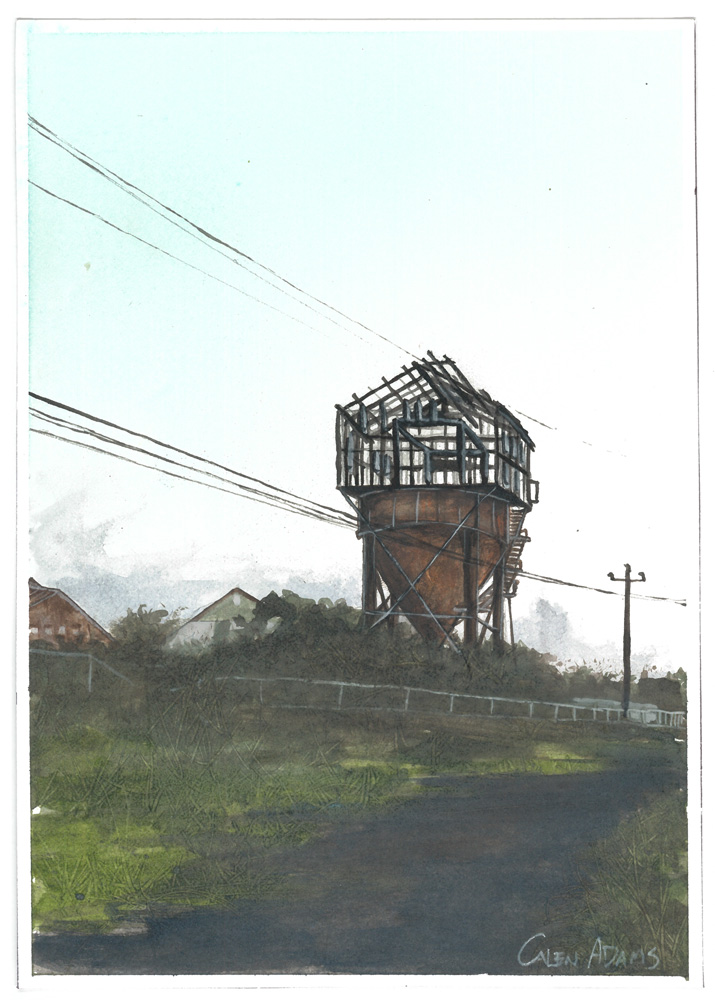
watercolor paintings
Maui Sugar Cane Ind.
The Sugar Cane Industry was a powerful and very influential force in the Hawaiian islands. Sugar was first introduced to Hawaii around 600 A.D. by the first settlers of Hawaiʻi who brought to the islands several varieties of sugarcane. The Native Hawaiians cultivated sugarcane, or kō in Hawaiian, and ate it as food and medicine. It wasn't until 1802 that the first sugar mill was established on Lanai. By 1880, Hawaiʻi had 63 sugar plantations.
The history of sugar is rich, complex and greatly influenced the Hawaii we know of today. Immigrants who worked in the plantations became the foundation of the islands’ multi-ethnic society, the “melting pot of the Pacific.” Sugar plantations controlled large masses of land and greatly impacted and transformed the topography to suit water needs: construction of tunnels to divert water from the mountains to the plantations, reservoir construction, and well digging.
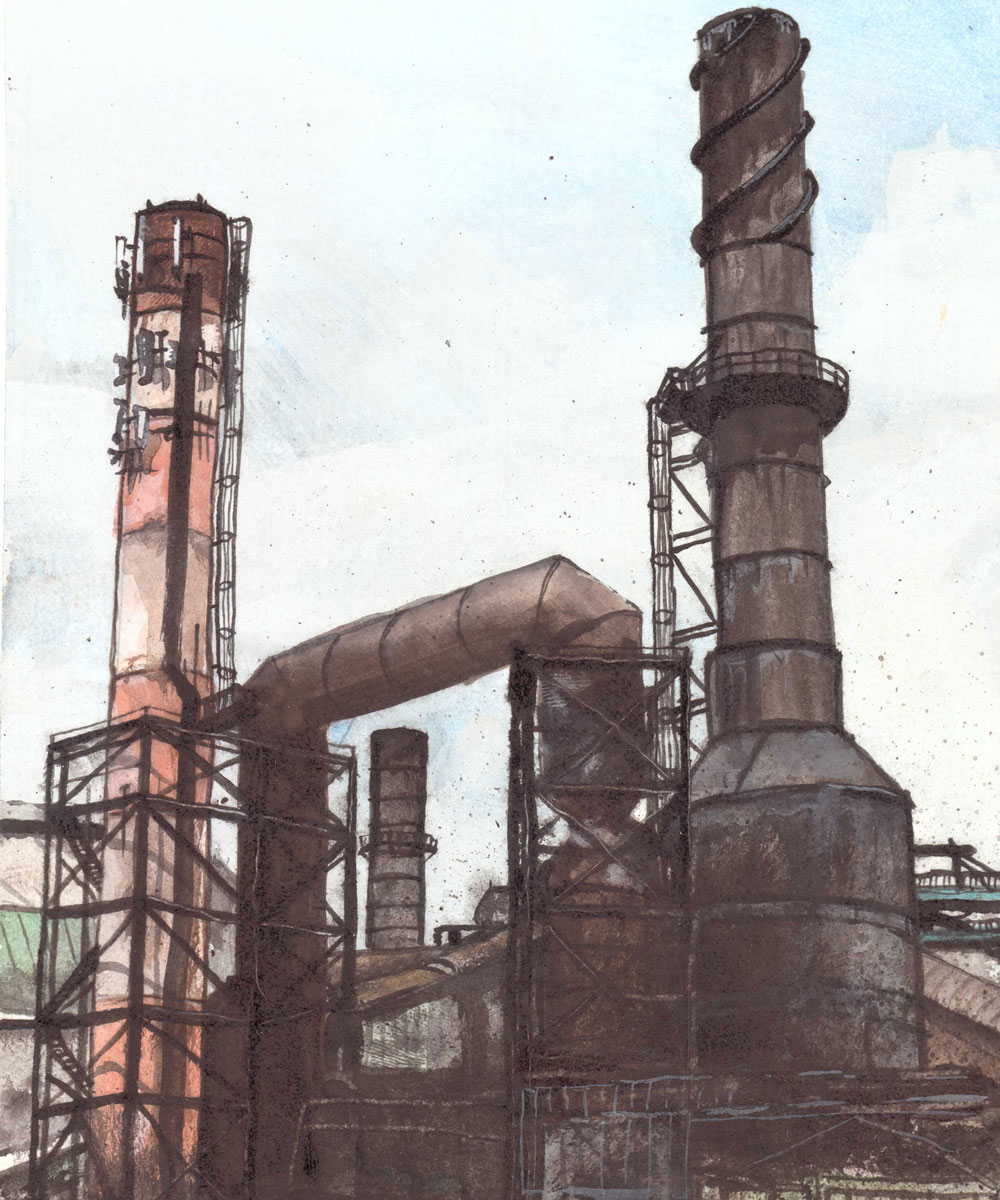
Built in 1901, the Puʻunēnē Mill was the last and largest sugar cane plantation in the state of Hawaii. Located on Maui, Puʻunēnē Mill produced the final shipment of sugar and closed its doors in December 2016. The Puʻunēnē Mill is a powerful presence and historic landmark on Maui. You can still feel the industrial energy of the towering smokestacks and see the heavy machinery once used in processing sugar for 115 years. Like many, the legacy and presence of the Puʻunēnē Mill inspires Calen.
Resources:
Sugar Museum
Wikipedia - Sugar plantations in Hawaii
University of Hawaii - Sugar Industry
Please use filter buttons below:
- View All Paintings
- For Sale

Title: Hansen Road. *Prints for sale.
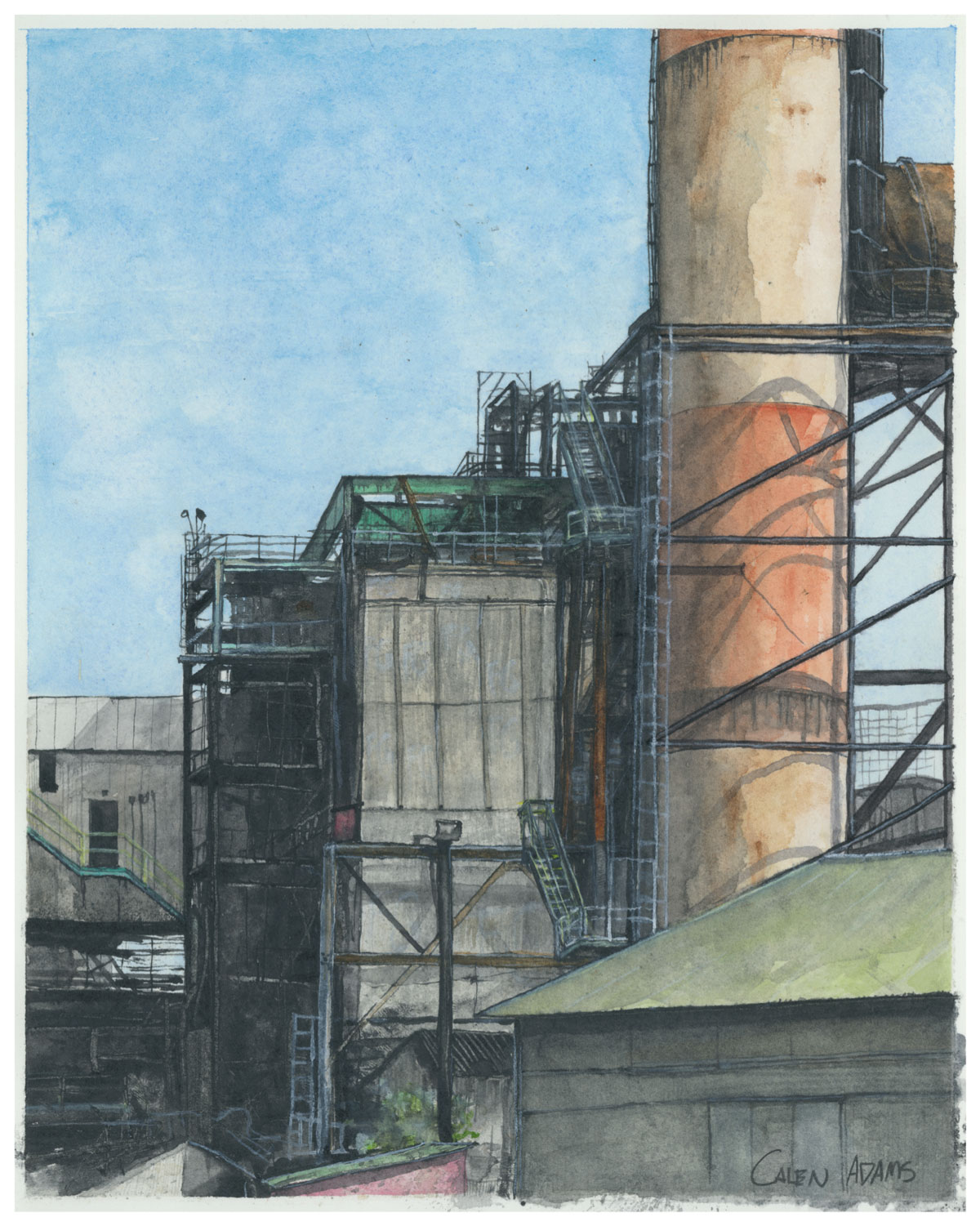
Title: Smokestack. *Prints for sale.
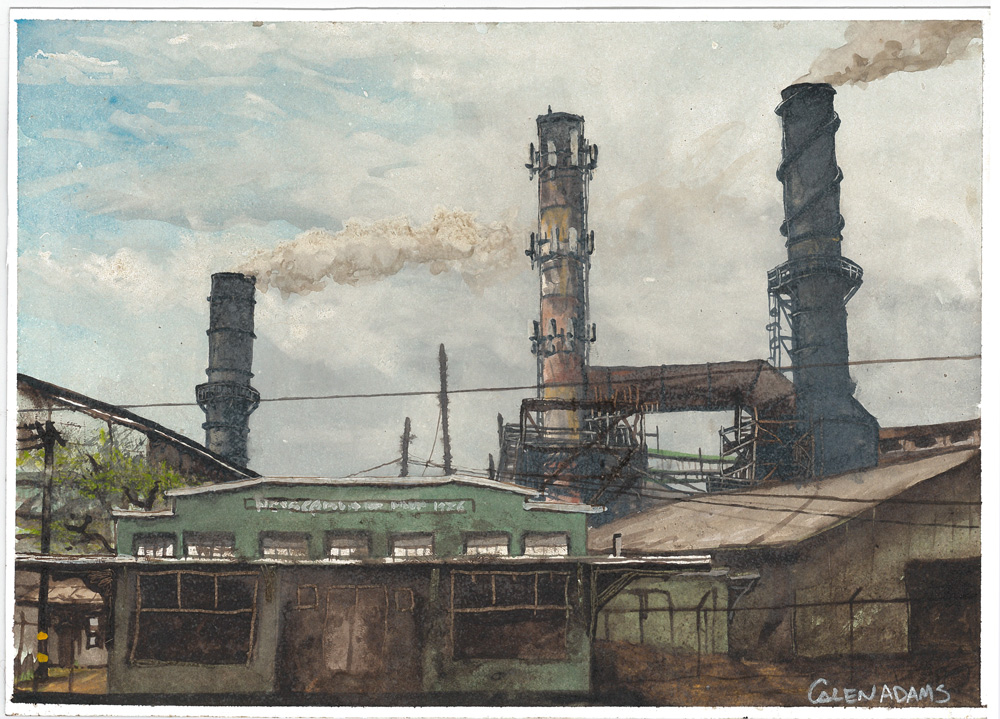
Title: Meat Market. *Prints for sale.
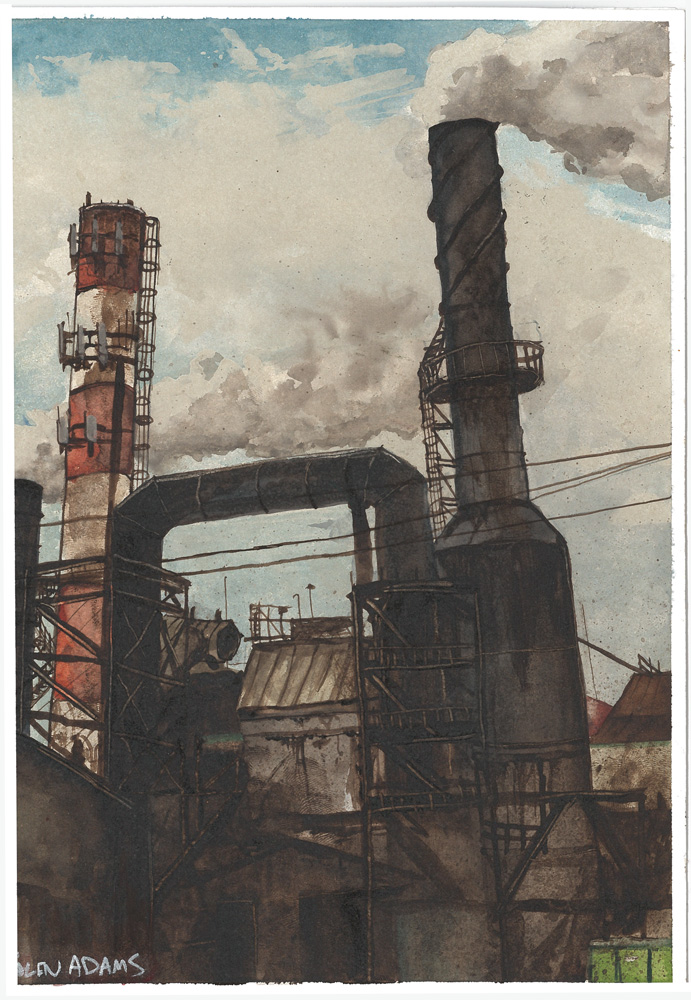
Title: Puʻunēnē Smoke Stacks.

Title: Puʻunēnē Sugar Mill.
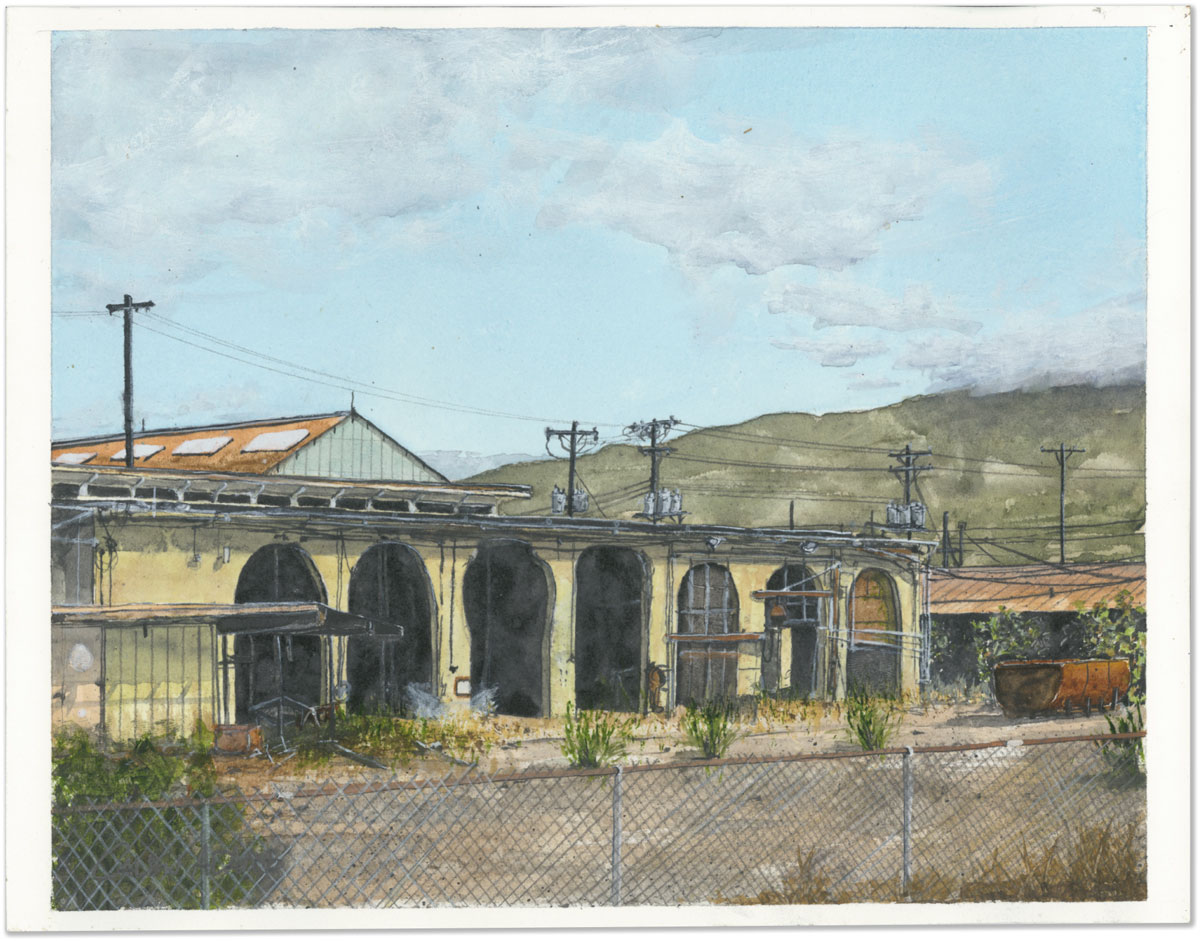
Title: Old Puʻunēnē
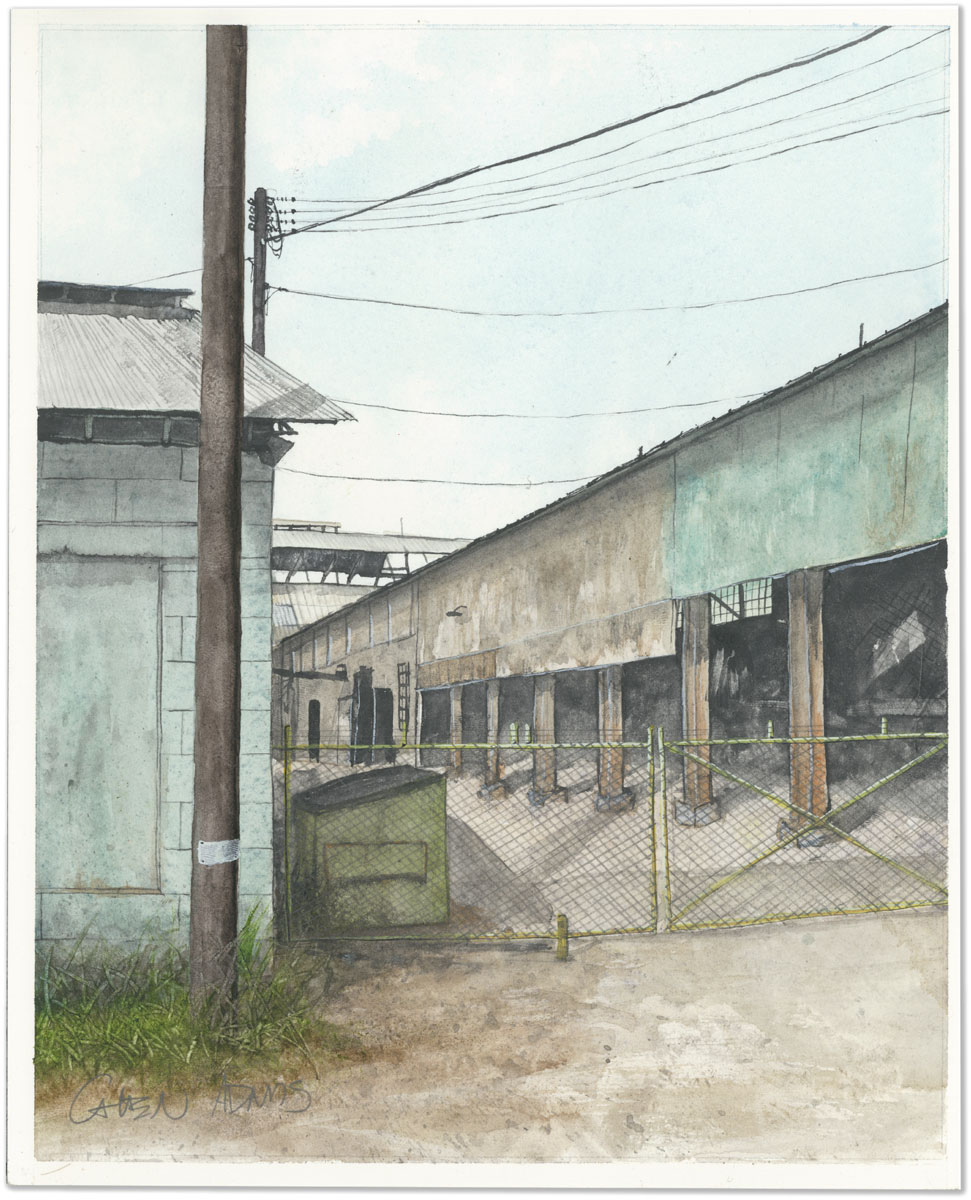
Title: Old Puʻunēnē Warehouse
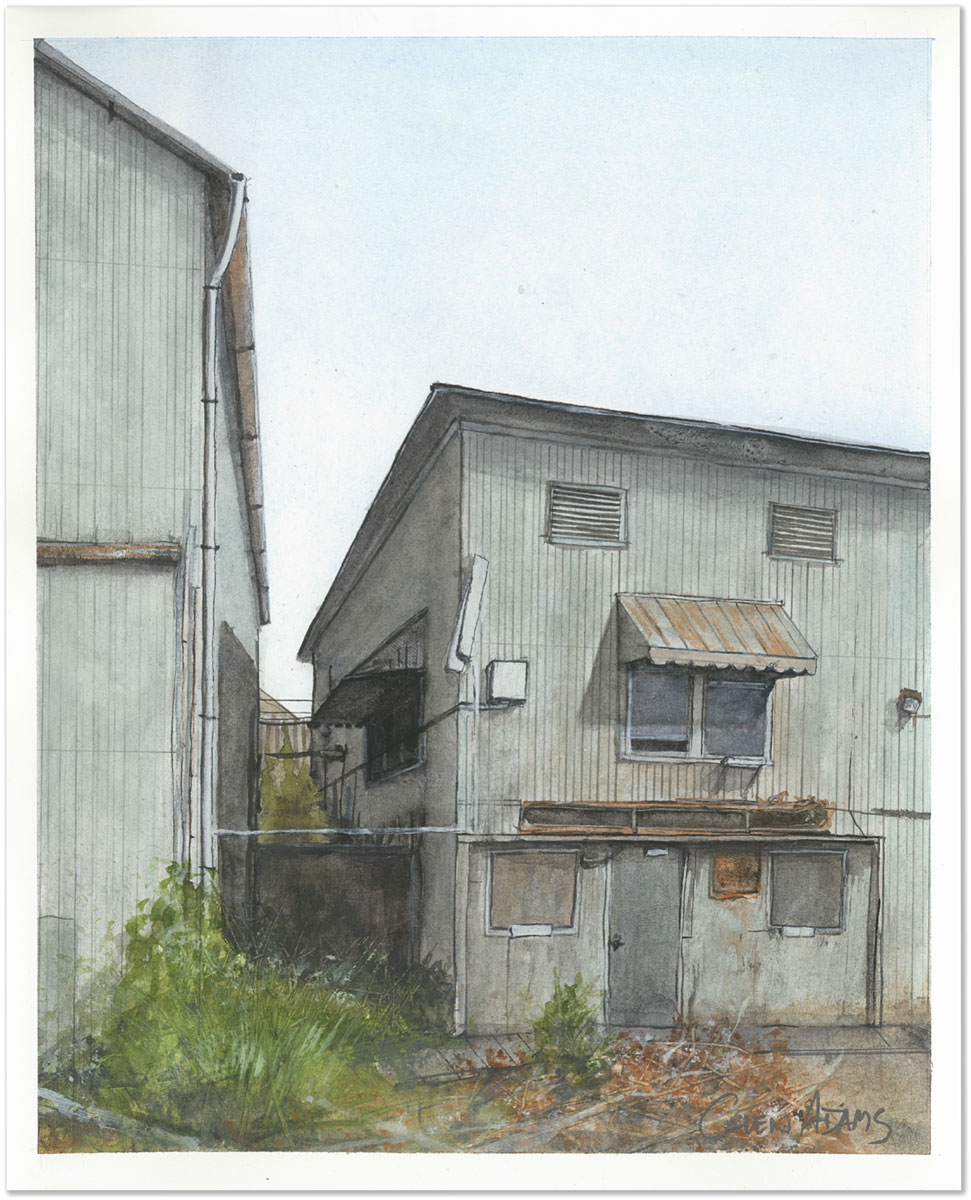
Title: Sugar Ally
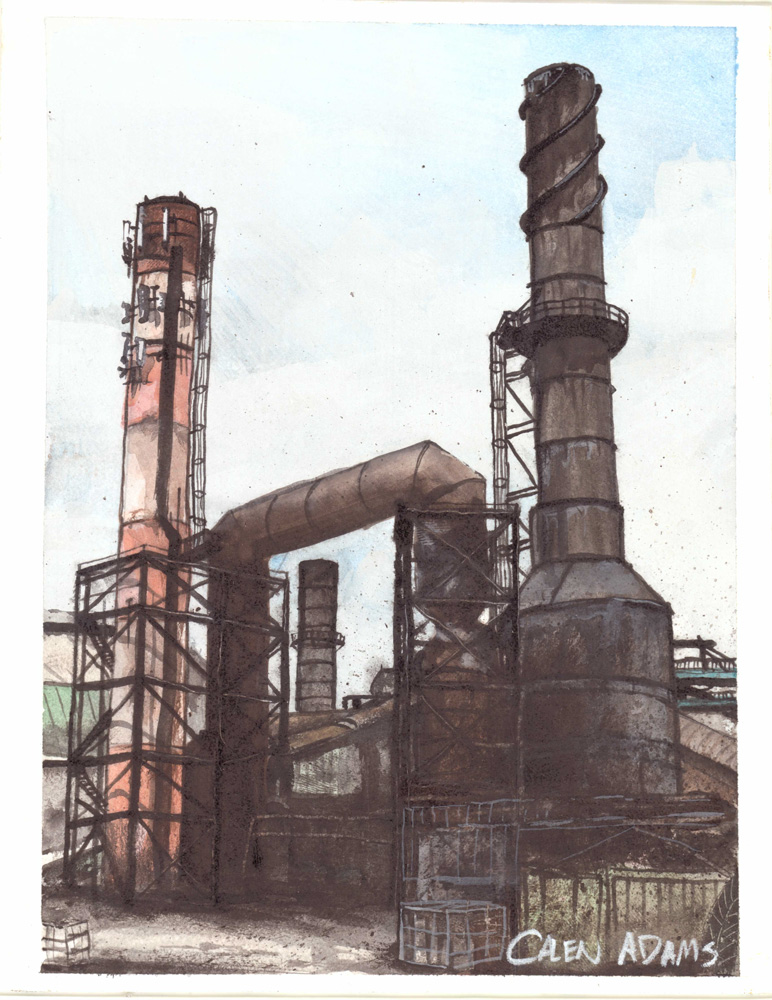
Title: Smoke Stacks. *Prints for sale.
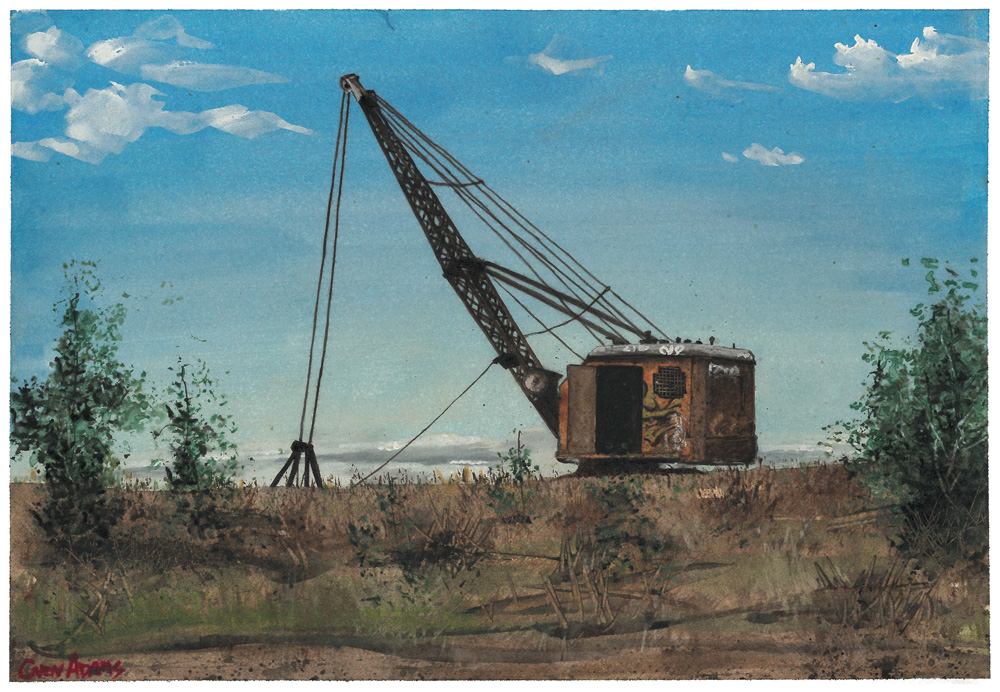
Title: Sugar Cane Crane.
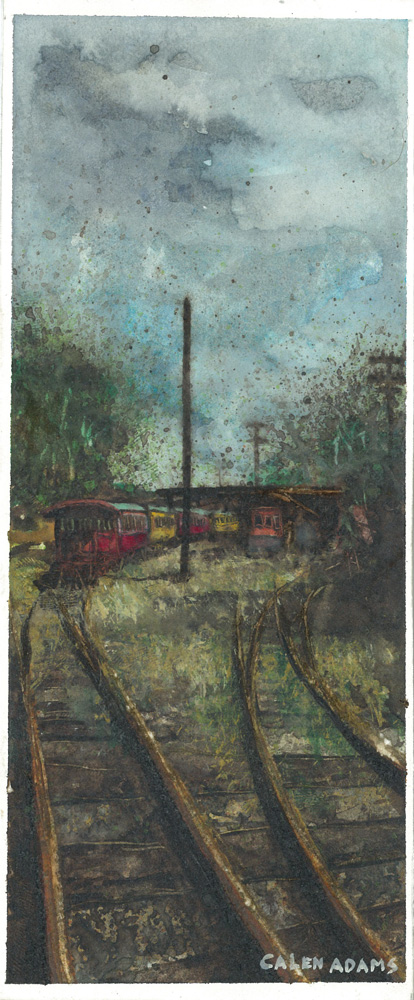
Title: Sugar Cane Train.
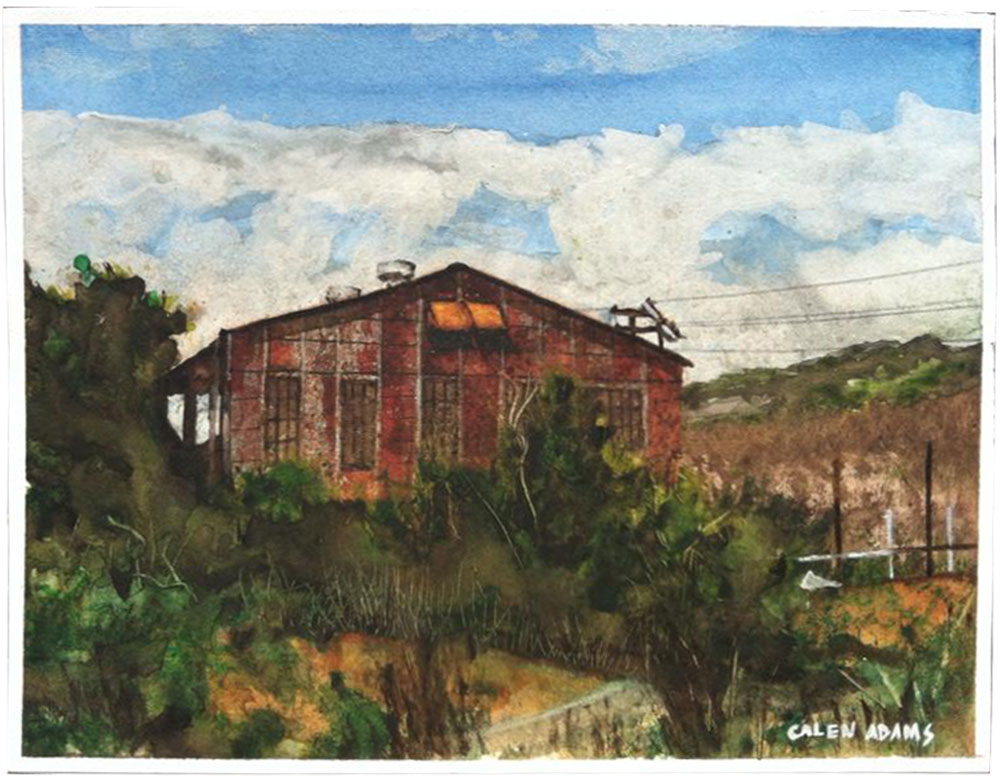
Title: Kaanapali Train Station.